
Lead Routing to Resellers
Fair lead distribution across your reseller network, rule-based
The reseller sales reality
B2B vendors selling software or hardware through an indirect channel typically work with a network of 20 to 500 partners: system integrators, value-added resellers, IT distributors, industry-specialized implementation partners. Marketing produces leads, the direct sales team works the largest enterprise deals, and the rest is supposed to flow through the channel.
The problem isn’t lead volume. The problem is the handoff: which reseller gets which lead? Who has already spoken to the end customer? How do we prevent two resellers from working the same deal? How do we see what’s happening in a long sales cycle without forcing resellers into extra reporting? How do we measure channel ROI?
Without software for this, those questions escalate into email chains, spreadsheets, and trust conflicts between vendor marketing, vendor channel management, and reseller sales.
Three things that set reseller sales apart from other channel models
- Resellers have their own CRMs, and will work there. Salesforce, HubSpot, Pipedrive are the norm in B2B software. No reseller switches systems for every vendor’s lead. The partner portal in leadtributor is therefore a slim receiving and acceptance layer for inbound vendor leads, not a CRM replacement. CRM-to-leadtributor synchronisation runs, when you want it, through the public API on the vendor side. We do not connect into reseller-owned CRMs.
- Sales cycles run for months, with many stakeholders. B2B software deals pass through procurement, IT decision-makers, business stakeholders, sometimes compliance. The tool has to carry the lead across the entire cycle without drowning the reseller in stage bureaucracy. Concretely: escalation if no one responds; automated follow-up if an accepted lead stalls.”
- Channel conflict is real, but prevented through clear rules, not after-the-fact dispute resolution. Rather than a formal deal-registration process, leadtributor relies on consistent, deterministic routing rules: one lead, one primary partner, a clear escalation chain. If you also need a vendor-approval workflow for opportunity submissions, it typically lives in a PRM system that can run alongside leadtributor.
Requirements and how leadtributor solves them
| Requirement | leadtributor solution |
|---|---|
| Structured lead handoff from marketing to the channel | Routing rules by vertical, region, specialization, language; consistent initial assignment per lead |
| Escalation on non-response before acceptance | Configurable stages: reminder, reassign, channel-manager notification |
| Stall protection after acceptance | Automated follow-up after a defined activity gap |
| Long sales cycle, multiple stakeholders | Activity and stage tracking across the full lifecycle through close |
| Channel reporting for the vendor | Per reseller / region / source: lead volume, acceptance rate, response time, win rate, order value |
| Connection to the vendor CRM | Public API, webhooks, Zapier, n8n. The vendor side syncs into your own Salesforce / HubSpot / Pipedrive |
| MDF campaign tracking | Custom fields on the lead (campaign ID, UTM source); values exportable via the public API for your BI analysis. A dedicated reporting dashboard for custom fields inside the leadtributor UI is not available yet. |
Which industries benefit most
B2B vendors with indirect sales through specialist resellers: ERP software (microtech, the SAP partner ecosystem, Sage partners), IT security hardware (REINER SCT, the Sophos channel, Watchguard), B2B SaaS with implementation services, cloud hosting with a channel model, industrial automation, telecommunications VAR channels.
Next step
See in 30 minutes how leadtributor would look against your reseller channel: with your verticals, your product portfolio, your escalation windows, and the connection to your own marketing and sales stack.
How it works
- Step 1
Aggregate lead sources from marketing and direct sales
Web forms on the vendor site, inquiries from performance and ABM campaigns, trade-show capture, pipeline handoffs from your own sales. Everything lands in leadtributor as a structured inquiry, with a consistent data model and the technical context fields a reseller needs for a first-pass evaluation.
- Step 2
Rule-based initial assignment via partner tags
Resellers in leadtributor are tagged with arbitrary attributes: vertical (manufacturing-ERP vs. retail-ERP), region, specialization, language, tier (e.g. Gold/Silver/Bronze), certification level, or other channel-specific traits. Routing rules use those tags as match criteria; round-robin as a tie-breaker when several partners are equally suitable. Every lead goes to exactly one primary partner; channel conflict is prevented through consistent rule application, not after-the-fact dispute resolution.
- Step 3
Acceptance in the partner portal
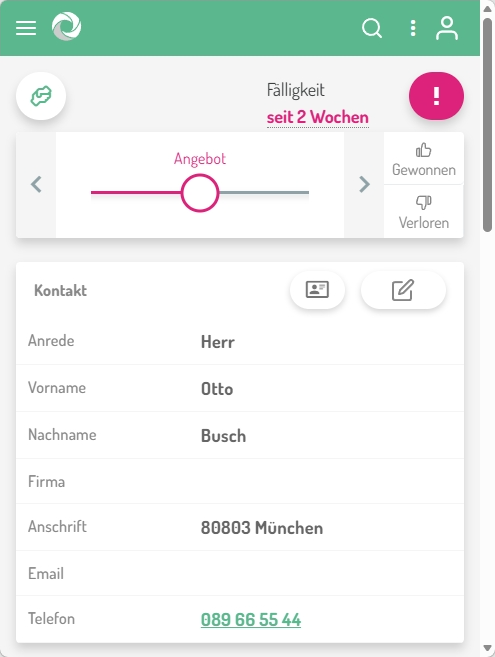
The reseller sees the lead in the leadtributor portal (a PWA that runs on any device, no app-store install) with contact data, inquiry context, source, and required fields. Accept, or decline with a reason (no vertical match, capacity, spam). On decline, leadtributor routes within seconds to the next suitable partner.
- Step 4
Escalation before acceptance, automated follow-up after
If the reseller does not respond within the window, a configurable escalation runs: push reminder, reassign to the next partner, optional channel-manager notification. After successful acceptance, leadtributor follows up automatically when a lead goes inactive for a defined period. No buried leads in the long sales cycle.
- Step 5
Tracking through the full sales cycle
Reseller deals run for months, not days. Activities, meetings, stage changes, quotes, close or loss are documented in the portal. Per reseller, per region, per lead source you see response time, acceptance rate, time-to-close, win rate, and order value, and can steer channel investment with data.
Frequently asked questions
What happens if two resellers work the same end customer?
leadtributor prevents that at the routing stage: every lead goes through the rules to exactly one primary partner. If a second inquiry for the same end customer arrives later, it gets assigned again through the identical rules (typically to the same partner) and is flagged in the lead record. leadtributor does not have a formal deal-registration mechanic; conflict prevention happens through clear, deterministic distribution rules.
How do we integrate leadtributor with our own CRM (Salesforce/HubSpot/Pipedrive)?
On the vendor side via public REST API, webhooks, and connectors through Zapier or n8n. Leads, activities, and status can be synchronized between your CRM and leadtributor, so channel reporting feeds into your existing pipeline reporting. Note: reseller-side CRMs are not directly integrated. Partners work in the leadtributor portal as a receiving and acceptance layer.
How does tracking work in a 6-month sales cycle with multiple stakeholders?
Through the lead's full lifecycle: activities, meetings, and stage changes are documented by the reseller and tracked in leadtributor. If a lead is inactive for a defined period, the software follows up automatically. Per stage you see pipeline distribution across all resellers.
What happens if the first reseller doesn't respond within the window?
You configure escalation stages before acceptance: push reminder after stage 1, reassign to the next suitable reseller after stage 2, optional channel-manager notification on repeated skips. Stage lengths are configurable per routing rule; enterprise deals can carry longer windows than SMB deals.
Can vendor marketing pre-qualify leads before they go to resellers?
Yes. leadtributor offers an optional pre-qualification step: incoming leads first land in a vendor-internal review inbox, and the marketing or channel team releases them one by one into distribution to the resellers. Useful for sensitive enterprise opportunities, high-value inquiries, or unclear lead quality.
Can we represent partner tiers like Gold, Silver, Bronze in routing?
Yes. Partner tagging in leadtributor is generic: you assign arbitrary tags (tier (Gold/Silver/Bronze), vertical, certification level, language, region, or your own channel-specific categories) and configure routing rules accordingly: e.g. enterprise deals only to Gold partners, SMB deals across all tiers, or tier-based priority within the same region.
What sales-cycle length fits leadtributor?
Reseller sales often run 3 to 12 months with multiple stakeholders. leadtributor tracks the lead across the full cycle. Automated follow-up prevents a forgotten lead from clogging the pipeline, and stage-level reporting surfaces stagnation early.
How do we measure which reseller converts best?
Per reseller leadtributor reports: lead volume, acceptance rate, response time, average time-to-close, win rate, average deal value, and lead-source distribution. Channel managers can distinguish top performers from weaker partners and target coaching, lead allocation, or program changes accordingly.
Can we measure MDF campaign ROI per partner?
Partially. leadtributor supports arbitrary custom fields on leads (campaign ID, UTM source, MDF budget pot, partner-specific tags), and the values are exportable via the public API. A dedicated MDF reporting dashboard inside the leadtributor UI is not available yet; aggregated ROI analysis per campaign today runs in your BI tool or a custom dashboard consuming the exported data.
Does leadtributor offer deal registration?
No. leadtributor does not have a formal deal-registration mechanic. If you need that capability (explicit opportunity submission by the partner with vendor approval and an exclusive working window), it typically lives in a PRM system that can run alongside leadtributor. leadtributor itself prevents channel conflict through deterministic routing rules.
Lead Routing to Resellers
Request a demo